 Reviews


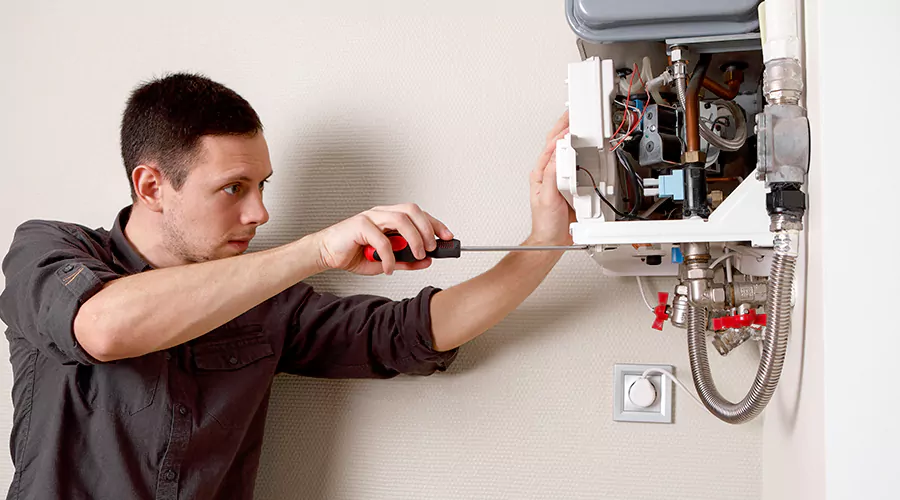
The most common problem with electric water heaters is a failed heating element, and sediment buildup at the bottom of the tank corrodes the lower element until it dies. Water heater repair costs $100 to $350 including labor.
Electric water heater problems follow a short suspect list. Two elements and two thermostats and one reset button cause nearly everything.
The temperature pattern at your tap names the guilty part before any tool comes out. This guide matches each pattern to its fix.
How an Electric Water Heater Heats?
Two submerged elements do all the heating in an electric tank. One sits at the bottom of the tank and the other near the top, and electrical current through each element heats the water around it. Each element answers to its own thermostat.
Division of labor explains the symptoms. The lower thermostat and element handle most of the everyday heating while the upper pair kicks in during heavy draws. A dead lower element therefore shrinks your supply while a dead upper element flattens the temperature entirely.One safety device supervises both. The high-limit switch with its red reset button cuts all power when tank temperature climbs dangerously, and that button explains half the sudden failures in this article.
Element Failure Is the Most Common Problem
Elements die more often than every other part combined. Over time they burn out or become shorted, and sediment does the slow killing by burying the lower element in scale. A buried element overheats inside its mineral jacket until the metal fails.
The electrical fingerprint confirms it. Bad elements often cause the circuit breaker to trip, so a breaker that needs regular resetting points at a failing element. A shorted element can also cook the water past the setpoint and trip the high-limit switch.
Diagnosis reads from the tap. A steady supply of lukewarm water indicates a defective upper heating element while hot water that runs out quickly indicates a defective lower element. Memorize that pairing and you've learned the trade's favorite shortcut.
Insider tip: The element itself costs around $20. Labor is the whole bill, which is why handy owners with a $10 element wrench fix this for lunch money.
No Hot Water at All
An electric water heater not working at all has lost power somewhere between the panel and the elements. Cold water at every tap means both heating circuits are dark. Work the chain from the breaker downward.
Start wide and narrow in. Electric hot water not working at every faucet confirms the tank rather than a fixture. From there the sequence runs:
- Check the breaker: The dedicated double-pole breaker trips quietly, so flip it fully off and back on.
- Press the reset: An electric hot water heater quit working overnight usually means the high-limit switch tripped, and the red button behind the upper access panel restores it.
- Check for a blown fuse on fused systems since replacing one costs $10 to $20.
- Test the elements: An electric hot water tank not working despite confirmed power needs both elements checked with a multimeter for continuity.
Persistent darkness points deeper. An electric hot water heater not working after the reset press and a breaker cycle has a dead upper element or a failed thermostat feeding it.
Insider tip: Kill the breaker before opening any access panel. The wiring inside carries 240 volts and the insulation batting hides it well.
Lukewarm Water or Hot Water That Runs Out
Partial heating is the lower tank telling on itself. An electric hot water heater not heating fully almost always has one working element carrying the whole load. The pattern tells you which one quit.
Endless lukewarm blames the top: An electric water heater not heating water past lukewarm has a defective upper element that never finishes its share. Meanwhile, a shrinking supply blames the bottom, since an electric hot water tank not heating enough for two showers in a row lost its lower element to the sediment layer.Thermostats mimic both failures: A failed lower thermostat on a two-element heater produces a limited supply of hot water, and an electric hot water heater not heating water despite healthy elements needs both thermostats tested. Timing quirks round out the list because electric water heater hot water not working only during morning rush hours suggests an undersized setpoint or a failing dip tube mixing cold into the draw.
Season matters too: Searches like hot water not working electric water heater spike every winter because colder incoming water exposes a weak element that summer forgave.
The Reset Button and Repeated Trips
The red button is a symptom reporter rather than a fix. One trip after a power surge means nothing. A pattern of trips means the switch keeps catching genuinely overheated water.
Three causes drive repeat trips. A thermostat stuck closed keeps an element heating past the setpoint. A shorted element heats without permission entirely. Loose wiring builds heat at the connection itself, and frequent breaker trips deserve an electrician's inspection for a faulty thermostat or wiring problem.Respect what the button guards. A high-limit switch that trips weekly is preventing scalding tank temperatures, so pressing reset repeatedly without diagnosis just rearms the alarm while the fire smolders.
Electric Water Heater Troubleshooting by Symptom
Common electric water heater issues map onto five symptom rows. Troubleshooting electric water heater failures starts at the breaker panel and ends at the elements with two stops between. The table names the first move for each row.
| Symptom | Likely cause | First move |
|---|---|---|
| Cold water everywhere | Breaker or high-limit trip | Reset both |
| Steady lukewarm | Upper element | Test and replace |
| Runs out fast | Lower element | Test and replace |
| Water too hot | Stuck thermostat | Replace thermostat |
| Breaker trips repeatedly | Shorted element or wiring | Professional diagnosis |
The order for troubleshooting an electric water heater never changes. Power comes first, the reset second and thermostats third with elements last. Most electric hot water heater troubleshooting actually ends at the second step because the reset button resolves so many sudden failures.
Safety frames every step past the panel covers. Proper troubleshooting electric hot water heater work happens with the breaker off and verified dead by a tester, and an electric hot water system not working is never worth a 240-volt shortcut.
Insider tip: A full reset also works through the thermostat by turning it all the way down and back up to the 120 to 140°F range.
Warning Signs Checklist
Nine signs cover the electric hot water heater issues worth acting on this month. Most electric hot water heater problems announce themselves through temperature patterns before total failure. Two or more matches mean schedule the diagnosis now.
- Showers turning lukewarm sooner than last month.
- The breaker or reset button tripping more than once.
- Popping or rumbling from sediment on the tank bottom.
- Rusty or metallic-tasting hot water.
- Recovery between showers taking noticeably longer.
- Moisture or crust at the element access panels.
- An electric bill climbing without a usage change.
- Water temperature swinging between scalding and cool.
- A tank past the 8 to 12 year typical lifespan.
What Repairs Cost in 2026?
Electric repairs stay cheaper than gas repairs across the board. Electric heaters are typically cheaper to repair and safer for DIY fixes. The table shows the 2026 menu.
| Repair | 2026 cost |
|---|---|
| Single element by a pro | $120 to $190 with standard access |
| Element replacement typical | $100 to $350 |
| Both elements plus thermostat check | $240 to $320 |
| Thermostat replacement | $150 to $200 installed |
| DIY element swap | About $30 in parts |
The replacement math has a bright line. Repairs under $300 often prolong the unit's life, while a unit over 10 years old or leaking makes replacement the better value. Average repair spending nationally runs $615 with a range from $90 to about $1,800.
When to Call a Professional?
Three findings move this repair past the DIY line. Each involves the electrical side rather than the water side. Element swaps on a verified-dead circuit stay within skilled homeowner reach.
- Repeated breaker or reset trips: Frequent tripping may indicate a faulty thermostat or wiring problem that needs a meter and experience.
- Any sign of scorching at the access panels or the junction box.
- A leak from the tank body: Elements can't fix a rusted shell and the visit becomes a replacement quote.
One habit protects the wallet either way. Compare at least three plumbers and schedule during weekday hours when the problem isn't urgent.
Prevention Doubles Element Life
Sediment kills elements and prevention targets sediment. Flushing the tank every year improves performance and extends the heating element's lifespan. Three habits carry the whole program.
- Flush annually: A few gallons through the drain valve removes the scale layer before it buries the lower element.
- Check the anode rod at year three: Replacing it once it's more than halfway corroded can add years to the heater's life.
- Hold 120°F: The setting slows scale formation and stress on both elements while staying safe at the tap.
The economics stay lopsided since preventative care can extend a water heater's life by 3 to 5 years for the price of an annual hour.
Conclusion
One buried element causes more cold showers than everything else in the electric tank combined. Lukewarm blames the top and short showers blame the bottom while repeat trips blame the wiring. The reset button reports problems rather than fixing them. This week, press your reset once and book a tank flush. Those two moves address the most common problem before it addresses you.
FAQs
How do I test a heating element myself?
With the breaker off and verified, a multimeter across the element terminals should read 10 to 16 ohms. No reading means a dead element.
Can just one element be replaced?
Yes, though pros often suggest both when the tank drains anyway since the second element has the same mileage.
Why is my water suddenly too hot?
A thermostat stuck closed keeps its element running. Replace it promptly because overheating stresses the tank and trips the high-limit.
Do electric tanks need flushing like gas ones?
Yes and arguably more. Sediment sits directly against the lower element instead of a burner plate.
What does it mean if the reset trips the moment I press it?
The tank is still hot or a short exists downstream. Wait 30 minutes and a second instant trip means call a pro.
Is it worth repairing a 12-year-old electric heater?
Rarely. Tanks last 8 to 12 years and money spent past that window buys months rather than years.